Showing posts with label Asynchronous. Show all posts

Tuesday, 13 May 2014

Week 4, Chapter 4 - Blended Content and Assignments

First, I'd like to start by saying Thank You to all of you who have been reading my blog.  I hadn't expected so many people from so many places to read my reflections - but I do truly appreciate it!  I love to write - and when life gets busy, writing always seems to be the first thing that disappears.  You may have noticed that I don't write "professional" blogs...this is on purpose.  I could.  But I don't on purpose.  My intention is to give you, the reader, true insight into how my (the student taking a MOOC on creating MOOCs) works, responds, reacts, analyzes and incorporates the subject into my life.


One of the things I am working on in "real life" (like there is anything but real life...) is a project to create a face to face daytime program for adults with special needs. This program will consist of a variety of activities that will develop life and employment skills and a healthy lifestyle. 

So what does that have to do with #BlendKit2014?!?!? Everything and nothing!!!

#BlendKit2014 is allowing me to (in a very safe environment) experiment with creating and designing a program.  It is giving me an opportunity to adapt a program to suit many different learners.  I am getting the chance to figure out what works better face to face or online.  I am learning different ways of developing my own personal learning network (LinkedIn, Twitter, Google+, etc) - and that each different platform gives me a different connection and result.

Some of the participants may work better knowing what we will be doing (like a syllabus). Some may want to read the instructions for a project at home before coming to the group.  Some may want a safe area to socialize (discussion group online in addition to face to face conversations).  All will want to feel safe, included, important and respected (tribal rules or protocols).


These are all things I will be applying to the development of this program.  I am grateful for the chance to take this course and to be able to apply the learnings to a real life program for some of the most special people in the world.


Onto Chapter 4


Recently, I realized that I had to chuck out my original course outline and start it over from scratch.  As I was working on it last night, it occurred to me that in order to validate the online learning, a move has to be made from multiple choice tests to assignments to truly find out what the student is learning.


Additionally, by reducing the number and value of the testing, there is hope that cheating will be reduced.  Although, how much cheating needs to happen in an open book, unlimited time, multiple try, multiple choice test, I don't know.

If we move the value to assignments, we have the opportunity to really see what the student is learning. A few favourite (and recent) assignments I've had:
  • Blogging your Personal Reflections on the recently covered material
  • Respond to the topic on social media (with #hashtags of course!)
  • Take part in the discussion group (0.5pts per post up to 10 points!)
  • Watch a video, craft a response and post to Padlet
  • Create a topic starter and provide 2 follow up questions to have a conversation in your classroom

These are just a few examples taken from 4 or 5 different MOOCs I am currently taking.  Some were assigned a grade just for taking part, others involved a rubric. Some involved just the presenter grading, others required peer review and comments.

When are assignments completed?


That depends on when and how content is presented.  In my course outline, there will be required reading and activities to do online, but in the F2F environment, we will review, provide context and do group assignments (some will be roleplays and some will be group discussion/activity based).  

The course I am designing for the class is based on developing selling skills in order to sell a category of merchandise in a retail location.  You can not properly develop selling skills by sitting at a desk, falling asleep in a lecture (not that I was EVER that kid in your 8:30AM economics class dozing!!  ZZZZZZ).  You need to interact with people.  Get hands on.  Try it out.  Participation is key!
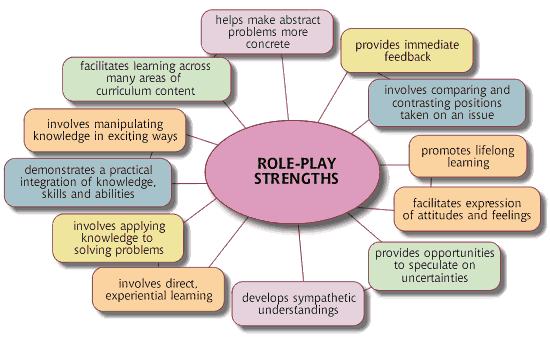


In fact, in my grading scheme, Roleplays will be worth 55 points. I realize that is a lot for people who don't like to roleplay BUT I can tell you a few important things:
  1. Roleplaying sucks BUT makes us better
  2. I've not met anyone who truly likes to roleplay, but most are better than they think at it
  3. Practice makes perfect!
  4. If you don't like roleplaying, but you do like making money, it is imperative that one gets over themselves!
  5. Roleplaying takes the scariness out of the real encounter with the customer!
I would never trust an electrician who hadn't installed a plug in class or a plumber who hadn't fixed a leaking toilet in an apprentice program. Why would I trust a salesperson who wouldn't try to sell something to someone in a practice environment? How would they ever work out their sales pitch??? 


That said, I've made 35 points available to in class and online assignments AND am offering an additional 2 bonus points for personal reflections...those assignments will include:

  • Group discussions and project
  • Commenting on reviewed material via social media
  • Commenting in discussion group on reviewed material
  • Personal Reflections

Content


As mentioned, I plan on presenting the majority of the content online, allowing for F2F time to be spent answering questions, digging deeper and group activities. I want the information studied on the computer prior to the F2F class so that everyone can have at least a basic knowledge and be able to participate in discussions and most importantly, in the roleplays. Online content will be presented in multiple formats - video lectures, articles, specifications from suppliers, etc.  In class will be mini lectures, guest speakers, group discussions, and information packets.

Learning Activities


During most F2F classes there will be a group activity.  These activities will explore many topics:

  • developing casual and merchandising greets specific to the products the customer appears to be showing interest.
  • developing qualifying questions to determine a customers needs.
  • creating their own list of related add ons to offer customers when making a purchase.
  • exploring the details of components of the products (i.e. What is MAPP testing in relation to toilets? How can it help someone make a decision? How can it determine which is a better toilet, etc)
  • roleplaying.  Tying the product knowledge and the selling skills together.  Wet, lather, rinse, repeat!!

Technology



I have to admit, this is the one area that has me more than a little nervous.  I've not set up a Learning Management System before, so it will be a first for me.  I've tried to select tools that are easily accessible:

  • an internet connection
  • access to Twitter (it's free)
  • access to a blogging platform (potentially for reflections) - Blogger and Wordpress are free
By using free, accessible and public tools, I don't have to worry about many technological issues.  Yay! One less thing to worry about. Beyond that, there would be a certain comfort for many students in using a tool they commonly use on their own time. This might help bridge concerns they have over blending online and F2F learning.  


At the end of the day, it is all about creating a great learning experience for the student - one that they feel was worth their time, was high quality and interactive.


Monday, 28 April 2014

Week 2, Chapter 2 - Blended Interactions


I've just finished reading Chapter 2 - and WOW!  Where do I want to start???


Do I want to talk about Content vs Context?  


Content can be looked at as the subject matter; facts; written matter.

Context can be looked at as the way in which the facts can be fully understood.

Content understanding can be measured in knowledge recall tests.  Context understanding comes from explaining why something is the way it is.  I'm a big believer that content can be learned from reading and watching videos on-line, but the context comes through facilitated means - F2F discussions, webinars, group chats to discuss the topic.  Each is important - equally so...


Maslow's Theory and how the interaction of student and teacher or student with other students is an expression of human need?  


This could be viewed in terms of Safety (gained by having knowledge of how to deal with various situations, a safe environment to share thoughts and opinions), Belonging (as part of an on-line community), Esteem (in terms of building self esteem by conquering new material, earned respect of others based on their work, etc). and in Self-Actualization (ability to problem solve, acceptance of facts).  An on-line community, properly facilitated, can help fulfil many stages of the hierarchy of needs.

That interaction between student and teacher as well as student and other students needs to be kept in front of mind while planning a course.  Sometimes direct dialogue between student and teacher with feedback is best.  Other times, dialogue amongst students will allow for the greatest growth in understanding, rationale, and defending ones position.


How "learners generally value social contact and faculty guidance, especially when entering a new field or course of study (de Laat, 2006)" (quoted from text)? 


Having F2F meetings early in the course provide an opportunity to address fears, explain how the blended courses work (especially for a student who hasn't taken such a class before), and build relationships.  Those F2F relationships put a face to a name in a chat group, helping to create a safer environment in which to share ideas.  It is harder to disrespect someone you have a real connection with versus someone who just exists online (minimize trolling).


About interaction with Experts?  


Having Subject Matter Experts (SMEs) take part in F2F or on-line sessions can give greater context to the content, provide real life experiences and examples, as well as to create a real life contact that may be useful in finding employment later on.


More on Gamification? (Yes, this interests me greatly!) Progress bars, badges for completed tasks, levels of complexity...as long as it benefits the material and doesn't take away from it.


The role of educators? 


I loved the concept of the educator as a Concierge...or Network Administrator. A Network Administrator places students at the centre of their Personal Learning Network, which is constructed by the student with the help of the instructor - ensuring they gain the skills needed to construct the network for learning, evaluating their effectiveness, forming connections in a more holistic and diversified learning environment.

The concierge directs learners to resources of which they might not be aware. Sometimes through lectures, sometimes through self guided learning (i.e. Google it! LOL). This pushes students into learning possibilities that are perfect right now.  This also allows for learner designed programs and the teacher to be more of a tour guide.


The importance of not only what material is placed on-line, but the ways in which a student can interact with it.  Watch, comment, group chats, blogging, various "techno expressions".  Are you just posting a syllabus? Or creating an area for dialogue that allows students to ask questions, comment or state their own expectations? Are you creating opportunities for students to talk about how a class will help them meet their academic or professional goals?  To return to it through self reflection?

Asynchronous learning and it's value 


Especially for ESL students, but the importance of maintaining a connection to the community or class at large.  ESL students have a chance to review, translate, refer to other sources before communicating to the group at large (a HUGE benefit!).  It allows all students time to look up additional sources, draft, and refine before posting.  Students can become more confident in their responses (provided they did their work first!).


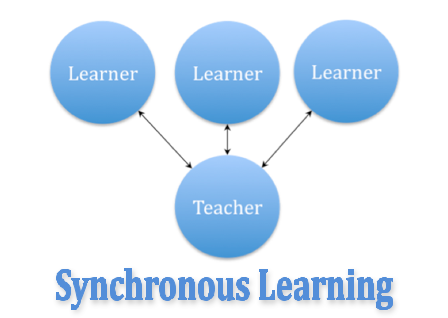
Synchronous learning and the creation of a community.


Synchronous activities can provide a sense of community (going back to the Maslow discussion - creating a safe environment for the expression of opinions). 


Encouraging expression - with peers, instructors, experts and potential employers.  


How the expression changes between groups (formal vs informal tones, word choices used if expressing to someone who studies their topic vs someone who doesn't).  Students should be prepared to make their case, state opinions and answer follow up questions.  Audiences should be mixed up to provide the opportunity to talk to many people.  Methods should also be mixed up (Blog, Vlog, Podcast, wiki, e-Portfolio)

What is an e-Portfolio?


To make your own, check out this lesson by a teacher for his class:


Guidelines - why? What? Creating models?


Ensuring your students know what you want is paramount!  If you fail to give clear instruction, you can expect to get everything from garbage to gold back!  In a F2F class,students can ask you questions easily and directly.  In an on-line or blended class, there is a delay in getting a reply.  Sometimes taking days to get a response.  Which is frustrating for a student who doesn't know if they are on the right track!

By creating a model assignment, you can demonstrate to your students what you consider to be good work! Ensure they understand how to submit the assignment and the risks involved in sharing their document in an open forum (others being able to change or steal their work).


Importance of role of interaction between students, teachers. How technology can be used to guide learning or as a method of expression.


Technology is great.  But it adds zero value if you do not take time to provide timely feedback to the student.  That means reading and commenting on their blogs.  Joining in discussions.  Referring to a group chat in a F2F meeting.  

Ensuring your students know you are paying attention to what they are saying and doing.  It adds to the community you are growing!

So that is what I got from the reading and the supplemental research I did to support the reading and fill in my own gaps. I love having a structured environment to learn within that prompts me to research and discover extra things on my own!