Showing posts with label #blendkit2014. Show all posts

Friday, 30 May 2014

A final review on #BlendKit2014...a thank you and comments on our Learning Culture

Hello and Welcome Back!


This is my very last post on #BlendKit2014 - as I am not submitting a portfolio, I'm now done the course - but I'm not done learning.  Not by a long shot!

I will be continuing to take MOOCs and continuing to write about them - although not always here.  I will share links to my blogs as they are posted just in case you want to keep up with me :)

I'm starting a course on Gamification from OpenLearning - I expect to start posting about it in a week or two...You will get the details here as soon as I can release them!  If you've read my blog before, you know that Gamification and E-Portfolios really sparked my fire!

In the meantime, I have been reflecting on my MOOC experience in #BlendKit2014 (specifically, although Intro to Marketing on Coursera has been similar in experience).  The community we've built.  The shared experience. I've come to realize something.

Universities have it all wrong.  When they say MOOCs can't replace the school culture, the classroom experience and the one-on-one interactions with the professors, I have to ask, "What dream world do they live in??".

When I attend Saint Mary's University, I was lucky.  In the grand scheme of things it's a small school, although in Canada we would probably consider it a medium school.  I knew who my profs were.  They might know my name...but generally I was "Oh right, the one who wrote about...".  I didn't have many convos with the profs, the classes weren't filled with debate, I didn't know half of my class.

Which was ridiculous.  Some classes had 30 people in it.  Some upper level courses had 12.  I didn't know them.  They didn't know me.  We had a "sage on stage" most times with limited discussion.  We didn't try to help each other to understand the material or the context.  We were not a community as such.

Now again, I was kind of lucky.  I was on the executive of the English Society.  I arranged to have profs come in for symposiums to share their latest research (we made for a great group to tell you where you ideas had room for improvement!!) and often a beer or two after.  I had office hours and spent some time debating concepts, imagery, context, symbolism, etc with a few students - generally not those in my class though.  I didn't ever feel like my understanding was important to anyone else. I was alone in making my education count.  And...that led to me maybe not working quite as hard as I should have...

I worked ridiculous hours while in school - one year I did 52 hours a week for an entire semester, went to school full time and still had a social life.  Crazy? Yes! Did I do homework?  Barely.  Did I put forth nearly as much effort as I do now?  Nope.  Not by a long shot!!

Learning about Blended Learning meant I did probably 6+hrs/wk of work to understand the content and context of the work.  Researching, piecing things together, and reflecting in this blog...at least 6 hours/week.  Just for this course.  I have been taking 8-10 more at any time.  But I had help.  I had a community of people who would talk about concepts on twitter, Google+ or my blog.  Or the discussion forums.  Or LinkedIn.  I had a personal learning network.  I made connections that I want to stay connected with.

People shared their ideas, their understandings, their successes and failures (real or perceived).  They invested in each other - showing their work at various stages, looking for feedback and advice - which they got!  Our shared goal was to have a deeper understanding.  That we all have a deeper understanding.

MOOCs can drive the Learning Culture.  It's driven by the participants, not the university and not the professors.  Each may take part, but it is the students who take the lead, help each other, look for deeper meaning, share, support, and ensure no one who wants to get ahead is willingly left behind.   We drive the Learning Culture.

We did.  Us.  I'm so glad to have had the chance to take this course with each of you.  We came in from many different walks of life, experiences, and understandings.  We finish this course with a shared experience, a shared understanding, a shared desire to help our connections find a deeper learning.

Time for some Confidential Information...


I was very intimidated at the beginning of this course - I realized that I was one of the few who didn't teach in a school or - even scarier - in a university.  I thought about dropping out a dozen times in the first week even though I loved it, was learning and having fun.  Seeing so many people with PhD or EdD after their names or job titles that were followed by at X University...Yikes!  I only had a little ol' BA...and I seldom talk about it!  And I have been working in retail (and retail training)...Double Yikes!  But this community (thankfully) quickly grew and made me feel like it was OK to come in from a different angle.  That my experiences could add value and occasionally a different viewpoint.

Had I taken this course at a brick and mortar institution, I would have withdrawn and run for the hills by Week 2.  I'm glad I didn't.


I've written a slightly more defined version of what I am emotionally trying to explain here over on Accredible.com.  The culture we created is just as relevant as the culture at any brick & mortar school - and possibly more valuable!  What we created was something I was never able to find at any university (even though the schools all say they have it).

Thank you Dr Kelvin Thompson and Dr Linda Futch for creating this fantastic program and providing the forum for a Learning Culture to be built.  Your feedback and participation in Social Media played a great part in our community development.  Your in course emails provided great feedback and support to a gal who felt like a fish out of water but was loving to learn about Blended Learning.  Should you ever run this course again from a corporate training perspective, let me know!  I'm totally in!!

To my fellow coursemates, I look forward to staying in touch via twitter, each others blogs, Google+ and the LinkedIn group.  I hope to see you again in another course and wish you great learning, great understanding, great happiness and great success!

Monday, 19 May 2014

Week 5, Chapter 5: Quality Assurance in Blended Learning

Well, we're coming to an end of #BlendKit2014.  This is the last chapter to read, the last reading blog to write.  It's leaving me a little sad to be quite honest.  That said, I will still be writing about MOOCs once this course is done.  I still have topics to explore. I'm still taking courses and I am still interested in designing and developing blended and online courses.  As I have previously mentioned, I will be moving on to developing a program for adults with varying abilities which I am quite excited about.

Moving on...


Chapter 5 asks us to think about how we will know if our course is sound before teaching it. How will we know if it was effective once taught? How do we define quality? Success?

It's a little scary.  Because we can't. Not by our typical methods.

To start we have to define blended learning and what the best combination of online and F2F learning experiences happen to be...at this point in time, it seems impossible to do.  What works in one course with one teacher and one group may not work the same if one of those factors changed.  We know those factors change regularly - even within one course (as a side note, I am taking one 9 week class that has been divided into 3 - 3 week sections, each taught by a different prof) - and that can change the dynamics and what "works".

If only creating a blended learning course was as simple as creating a blended beverage!


Various researchers have identified some things that can help construct an effective blended learning course:

  • Rigorous Learning Assessment (Riley et al, 2014)
  • Responsiveness to Learner Characteristics (Skibba, 2014 and Dziuban, Hartman, and Mehaffy, 2014)
  • Student Engagement (Vaughn et al, 2014 and Dringus and Seagull, 2014)
  • High Quality Faculty Development (Dziuban, Hartman, and Mehaffy, 2014)

So you design a course that includes rigorous learning assessment, etc.  How do you know if your course is good or bad?

Is it good or bad??


First, you have to stop looking at the terms "good" or "bad".  It's a cheap cop out to giving quality, constructive feedback.  It can't just be based on whether it met "sufficient enrollment, adequate retention, academic rigor, student success, student satisfaction) at rates comparable to face-to-face courses (as if meeting face-to-face is, itself, a mark of excellence) or to the level of satisfaction of an accrediting agency."  There are no universal standards for blended learning course quality.  If such a standard existed it would be hard to create a tool to measure it by - and even if you made a tool, it would be too time consuming to effectively use.

Using for-profit companies to host an online courses has led to their developing specific standards for online courses. Most groups have a checklist or rubric  and give a "summative, ordinal rating". Once  a course has been reviewed with the form, there is a punch list of things to improve before going live next time. 

It's very important to survey your learners at multiple stages of your course to give you a chance to adapt to their needs.


There has to be evaluations completed at multiple stages by the various stakeholders - students and peers who may be auditing the course.  We must remember that it isn't the design of the site or even the specific content (we know it will change and develop as the course develops) but truly the lived experience that allows one to review the quality of course.  It becomes imperative to ask a cohort to audit your online or blended course - someone who can provide insight and feedback that will help you better develop your course in future iterations.  Someone who saw what went right or wrong in real time (like having someone sit in on a lecture to give you a review to improve student engagement). Always close the course with a survey to determine effectiveness, perceived quality of content and teaching methods, usefulness of assignments or quizzes, how frequently they used the forums, etc.

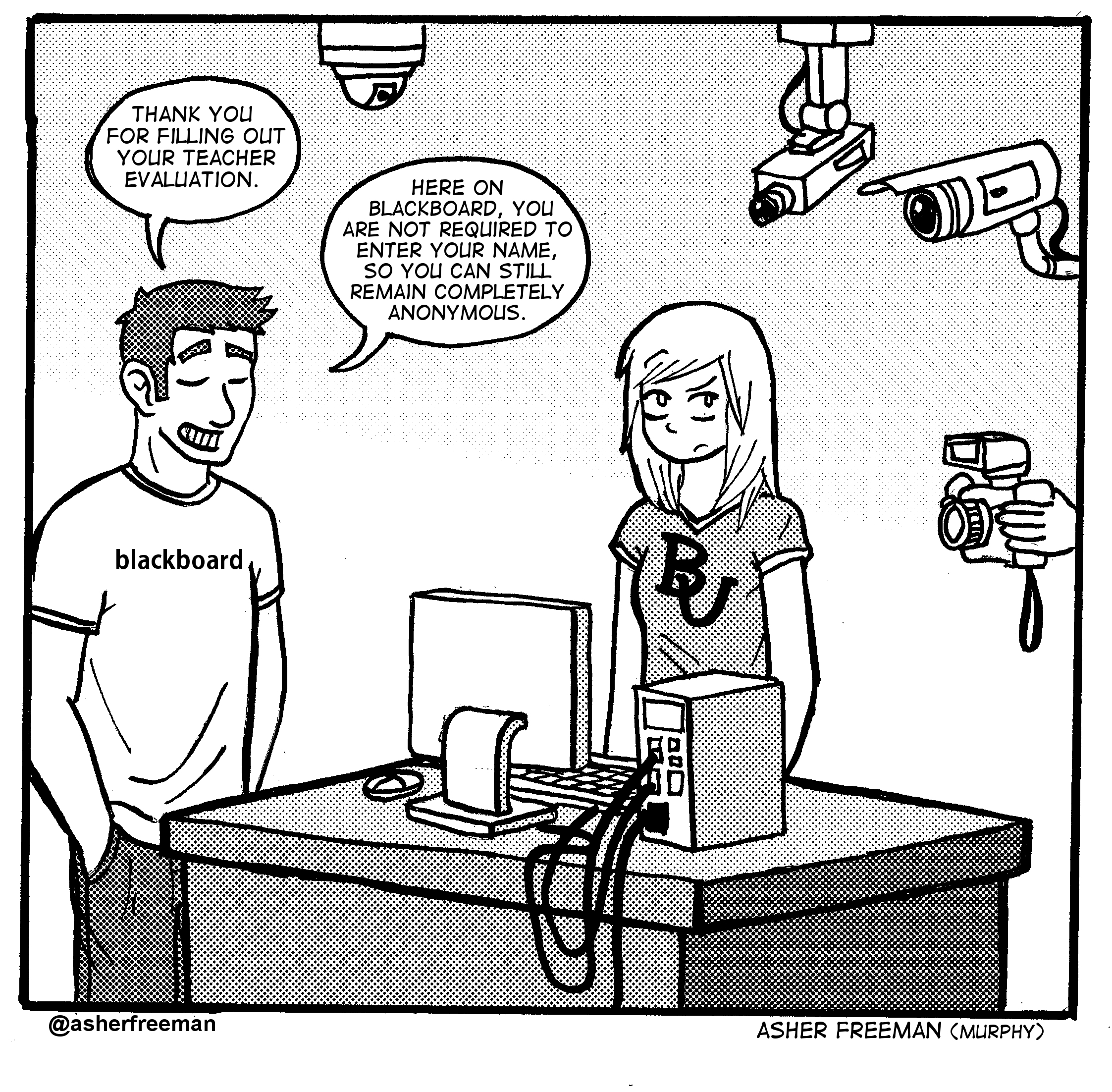
Make sure your surveys can be completed anonymously for useful and honest feedback...

Teaching Effectively


How can you teach effectively in a blended course?  
  • By being organized in your class and in your LMS.  
  • Knowing the material (no different than in a F2F class).  
  • Clear communication (you cannot over communicate - especially online, explain and over explain...you can't go wrong!).  
  • Provide timely feedback in the forums.  
  • Return graded assignments in a fair timeframe.  
  • Admit your technological know how up front (people are more forgiving if they know you are not a tech expert) but make friends with people who can help you out if you run into difficulties.
  • Use the feedback that you are given by past classes.  Use it to change the material, format or your teaching style to suit the class.


To help yourself...blog...write in a diary...keep a word document on your laptop...whatever to store your reflections.  What did you do?  Did it work?  What would make it work better? Did you achieve a goal?  Did you fall short?  Why? Why not? Did you get assignments graded within your self imposed time frame?


We tell students to reflect on what they have learned.  We should follow our own advice and reflect.

Back to the beginning...


How do we know how "good" our course is?  Well...we don't know exactly.  That measurement will only truly be known by the participants.  And that will change from person to person, class to class, course to course.  All we can do is survey and ask for their feedback.  Then we must react to that feedback and adjust for the next time. And survey, react and adjust. Wet, lather, rinse and repeat.


Tuesday, 13 May 2014

Week 4, Chapter 4 - Blended Content and Assignments

First, I'd like to start by saying Thank You to all of you who have been reading my blog.  I hadn't expected so many people from so many places to read my reflections - but I do truly appreciate it!  I love to write - and when life gets busy, writing always seems to be the first thing that disappears.  You may have noticed that I don't write "professional" blogs...this is on purpose.  I could.  But I don't on purpose.  My intention is to give you, the reader, true insight into how my (the student taking a MOOC on creating MOOCs) works, responds, reacts, analyzes and incorporates the subject into my life.


One of the things I am working on in "real life" (like there is anything but real life...) is a project to create a face to face daytime program for adults with special needs. This program will consist of a variety of activities that will develop life and employment skills and a healthy lifestyle. 

So what does that have to do with #BlendKit2014?!?!? Everything and nothing!!!

#BlendKit2014 is allowing me to (in a very safe environment) experiment with creating and designing a program.  It is giving me an opportunity to adapt a program to suit many different learners.  I am getting the chance to figure out what works better face to face or online.  I am learning different ways of developing my own personal learning network (LinkedIn, Twitter, Google+, etc) - and that each different platform gives me a different connection and result.

Some of the participants may work better knowing what we will be doing (like a syllabus). Some may want to read the instructions for a project at home before coming to the group.  Some may want a safe area to socialize (discussion group online in addition to face to face conversations).  All will want to feel safe, included, important and respected (tribal rules or protocols).


These are all things I will be applying to the development of this program.  I am grateful for the chance to take this course and to be able to apply the learnings to a real life program for some of the most special people in the world.


Onto Chapter 4


Recently, I realized that I had to chuck out my original course outline and start it over from scratch.  As I was working on it last night, it occurred to me that in order to validate the online learning, a move has to be made from multiple choice tests to assignments to truly find out what the student is learning.


Additionally, by reducing the number and value of the testing, there is hope that cheating will be reduced.  Although, how much cheating needs to happen in an open book, unlimited time, multiple try, multiple choice test, I don't know.

If we move the value to assignments, we have the opportunity to really see what the student is learning. A few favourite (and recent) assignments I've had:
  • Blogging your Personal Reflections on the recently covered material
  • Respond to the topic on social media (with #hashtags of course!)
  • Take part in the discussion group (0.5pts per post up to 10 points!)
  • Watch a video, craft a response and post to Padlet
  • Create a topic starter and provide 2 follow up questions to have a conversation in your classroom

These are just a few examples taken from 4 or 5 different MOOCs I am currently taking.  Some were assigned a grade just for taking part, others involved a rubric. Some involved just the presenter grading, others required peer review and comments.

When are assignments completed?


That depends on when and how content is presented.  In my course outline, there will be required reading and activities to do online, but in the F2F environment, we will review, provide context and do group assignments (some will be roleplays and some will be group discussion/activity based).  

The course I am designing for the class is based on developing selling skills in order to sell a category of merchandise in a retail location.  You can not properly develop selling skills by sitting at a desk, falling asleep in a lecture (not that I was EVER that kid in your 8:30AM economics class dozing!!  ZZZZZZ).  You need to interact with people.  Get hands on.  Try it out.  Participation is key!


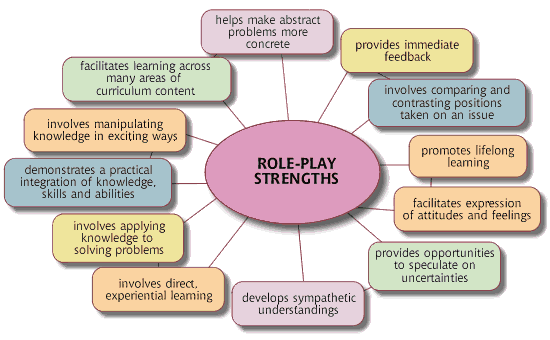
In fact, in my grading scheme, Roleplays will be worth 55 points. I realize that is a lot for people who don't like to roleplay BUT I can tell you a few important things:
  1. Roleplaying sucks BUT makes us better
  2. I've not met anyone who truly likes to roleplay, but most are better than they think at it
  3. Practice makes perfect!
  4. If you don't like roleplaying, but you do like making money, it is imperative that one gets over themselves!
  5. Roleplaying takes the scariness out of the real encounter with the customer!
I would never trust an electrician who hadn't installed a plug in class or a plumber who hadn't fixed a leaking toilet in an apprentice program. Why would I trust a salesperson who wouldn't try to sell something to someone in a practice environment? How would they ever work out their sales pitch??? 


That said, I've made 35 points available to in class and online assignments AND am offering an additional 2 bonus points for personal reflections...those assignments will include:

  • Group discussions and project
  • Commenting on reviewed material via social media
  • Commenting in discussion group on reviewed material
  • Personal Reflections

Content


As mentioned, I plan on presenting the majority of the content online, allowing for F2F time to be spent answering questions, digging deeper and group activities. I want the information studied on the computer prior to the F2F class so that everyone can have at least a basic knowledge and be able to participate in discussions and most importantly, in the roleplays. Online content will be presented in multiple formats - video lectures, articles, specifications from suppliers, etc.  In class will be mini lectures, guest speakers, group discussions, and information packets.

Learning Activities


During most F2F classes there will be a group activity.  These activities will explore many topics:

  • developing casual and merchandising greets specific to the products the customer appears to be showing interest.
  • developing qualifying questions to determine a customers needs.
  • creating their own list of related add ons to offer customers when making a purchase.
  • exploring the details of components of the products (i.e. What is MAPP testing in relation to toilets? How can it help someone make a decision? How can it determine which is a better toilet, etc)
  • roleplaying.  Tying the product knowledge and the selling skills together.  Wet, lather, rinse, repeat!!

Technology


I have to admit, this is the one area that has me more than a little nervous.  I've not set up a Learning Management System before, so it will be a first for me.  I've tried to select tools that are easily accessible:

  • an internet connection
  • access to Twitter (it's free)
  • access to a blogging platform (potentially for reflections) - Blogger and Wordpress are free
By using free, accessible and public tools, I don't have to worry about many technological issues.  Yay! One less thing to worry about. Beyond that, there would be a certain comfort for many students in using a tool they commonly use on their own time. This might help bridge concerns they have over blending online and F2F learning.  


At the end of the day, it is all about creating a great learning experience for the student - one that they feel was worth their time, was high quality and interactive.


Friday, 2 May 2014

e-Portfolios

Earlier this week, I wrote about PLN (Personal Learning Networks).  I wrote about growing your social network, creating contacts, creating one location for your most useful tools.  I didn't get to talk about e-Portfolios.


What is an e-Portfolio?


According to Wikipedia:


An electronic portfolio (also known as an eportfolio, e-portfolio, digital portfolio, or online portfolio[1]) is a collection of electronic evidence assembled and managed by a user, usually on the Web. Such electronic evidence may include inputted text, electronic files, images, multimedia, blog entries, and hyperlinks. E-portfolios are both demonstrations of the user's abilities and platforms for self-expression, and, if they are online, they can be maintained dynamically over time. Some e-portfolio applications permit varying degrees of audience access, so the same portfolio might be used for multiple purposes. According to Anderson, e-portfolios can then go viral and be passed on to be easily viewed by many on the web...An e-portfolio can be seen as a type of learning record that provides actual evidence of achievement. (emphasis mine)
A type of learning record that provides actual evidence of achievement.  I like that.  

When I wasn't training in my last job, I was acting as a recruiter.  In that role I reviewed thousands (upon thousands...ugh) of resumes.  Unfortunately for many of them, they felt fake. Really?  You did three different degrees and you WANT to sell pillows or sinks for a living?  That is your entire goal? Right.  Conversely, there were people applying who had very thin resumes, but once you spoke with them, you discovered they had a TON of experience, single courses, or volunteer experience that made them a great fit for the culture.  Most of which did not belong on a traditional resume.


As I may have mentioned, I take a lot of MOOCs.  Where do they belong on my resume?  They are education, but don't lead to a degree.  Or a certificate necessarily.  On my paper resumes, I have added them under Education.  I am excited (however) to create an e-Portfolio to list on my resume just below my LinkedIn site.


Just as LinkedIn gave me the chance to show who I worked for, tell what I did, and have co-workers share recommendations about me, my e-Portfolio will show the classes I have taken, show some of the work I did (notes, test results, copies of assignments), and allow other students to write recommendations about me. Another thing my e-Portfolio will do is provide evidence of the course - a link to a description of the course and a link to a digital copy of a certificate (if provided).

As a sidenote: e-Portfolios are used for more than just MOOCs.  F2F classes benefit as well.  All students can benefit.  More info is available here.

How do they help?


Like a portfolio or scrapbook, an e-Portfolio allows you to gather together all of your achievements, showcase them, and give extra weight to your resume.  Unfortunately, a lot of employers don't put a lot of value on MOOCs.  I don't think I would have prior to taking these classes. Being able to provide copies of your work or references from students or professors provides credibility to your continuing education.  

Besides, who doesn't like looking at a scrapbook or album?  They generate GREAT conversation starters in an interview and being able to show or refer to work you have already done will improve your confidence, better highlight your value and impress the heck out of the hiring manager!!


Who uses e-Portfolios?


According to my Google search, most e-Portfolio companies claim to be partnered with a lot of big name US, Canadian and British universities.  The e-Portfolio is often tied into a PLN or Course Management Systems.

I know a local Community College has tied Portfolio Learning into several of their diploma courses for years.  They are a requirement to graduate.  Not only do they showcase great work, but goals, personal reflections and a skills inventory.  Admittedly, these started off as paper portfolios, but users are adapting the medium to suit their needs.


What makes a good e-Portfolio?

http://electronicportfolios.org/balance/Balancing.jpg


  • Like anything it needs to be well organized. Documents need to be grouped with the right class.
  • To be Dynamic! Use multimedia, links to websites that you have worked on (like your blog about a course), notes from your course, screen shots of test results.
  • To include comments or recommendations from fellow students or professors. Not only does this give a nice boost to your work, it also shows the depth and breadth of your professional network (I worked with a professor from England, a student from Egypt, another student from Australia, etc).

Who offers e-Portfolios?

There are many places who offer e-Portfolios.  I've tried a couple.


I've taken classes from canvas.net and that site allows me to create my own e-Portfolio.  I spent a bit of time creating mine but I really wasn't satisfied with the outcome or the experience.


Then I tried using Google Sites.  By the time I got this far, I was done.  I couldn't figure any of it out.  Which is why I do not create websites.  Setting up a blogger.com site was enough for me!


As #BlendKit2014 provides badges, I have Credly.com and a Mozilla Backpack.  They show the badge and the requirements, but not MY work.  Pretty, easy to use, but not quite what I needed.


I thought I was done with the whole e-Portfolio adventure until I came across Danny King in a class I am taking on Coursera.org called "An Introduction to Marketing".  On a discussion board, he offered to share a copy of his notes from that weeks' videos.  When I clicked on the link, and I was impressed.  Further reading of the discussion took me to Accredible.com.  I was able to see his notes in a neat and organized fashion.  An impressive graphical list of courses he is or has taken, and copies of his certificates.


Impressed was an understatement.

I decided to try it.  One last kick at the can if you will.  The website was easy to navigate.  Things were clearly marked.  I could search course by Provider, Subject and start date.  In 30 minutes, I had several courses identified, my background selected, and a hunt started to find the files that I wanted to share.  I was happy with the result.


Then I realized I could find other people taking the same courses, so I visited their pages, and started following them (you never know if someone is going to share something that clears up a confusing topic!).  I added additional material.  I was building my network.


Then I had a small issue last night.  Canvas.net was listed as a provider, but I couldn't access the courses.  Others had been able to, and I worried that it was just me.  So I sent in a support request.  A minute later, I had a automated response letting me know they had received my message. By the time I was up and going this morning, I had a personal response with an apology, what happened (I found a bug) and an answer - they fixed it.  Less than 12 hours.  Eight + of which was sleeping time.  They took the time to fix it overnight.

Accredible.com is a very new site - it only went live on April 21, 2014.  That's 11 days ago.  They are focusing on the users needs, time limits, making a user friendly platform and ensuring an overall great experience.  I am so impressed that I HAD to tell you about them.  (No, I am not affiliated with them other than as a user.  I'm not getting paid to tell you about this.  This was not solicited by them).  I do not have time for platforms that are not intuitive.  This site was.

I don't do star ratings, but this site as it is today is 
and is only going to get better with the plans they have, the opportunities they have and their willingness to listen to the user (you can make and vote on suggestions!).

Of course, there are other sites, but I would suggest you go to Accredible.com!


    Tuesday, 29 April 2014

    PLN - Personal Learning Networks???

    WTH is a PLN????

    Personal Learning Networks??


    What is a PLN?  Well, I've done a lot of reading today on this.  To put it in simple terms (just like I like it) - it's using your social media tools to create a circle of people "around" you who can help you personally and professionally.  
    • It's the blogs you read by people who are interested in a similar topic.  
    • It's that Pinterest board you look at for ideas for creating lesson plans.  
    • It's your LinkedIn network of pros in your field.  
    • It's the folks you follow on Twitter from your #blendkit2014 course. 
    • It's the Q&A board that you go to.
    • Heck, it's even the YouTube channels you follow.


    Social Networks


    I love this top 10 list.  Especially #10.  Get to know the people in the office/class/cubicle next to you. You never know when somebody close by may have the answer you need, be a SME (Subject Matter Expert), know how to use Google forms better than you - or be willing to listen to a lecture and give you constructive feedback.  Foster these relationships.  Add them to LinkedIn.  Get an email address for them.  Follow their professional blogs.  I wouldn't suggest adding them to Facebook...you never know what they might post that you just don't want to know!!!


    Once you decide to create your PLN, you need to decide how "active" you want to be.  The graphic above gives you that designers POV.  I'm going to share my own with a few tools I use regularly.

    LinkedIn - High Profile, Low Communication, Visit as you like

    I'm going to admit upfront that I love LinkedIn.  In fact, if you would like to add me to your PLN, just click on the hyperlink.  I've joined various groups.  Sometimes I respond to posts.  More often than not, I don't but I enjoy reading others responses.  Frankly, if more than 1 person has shared my POV, I don't feel the need to share it again.  

    What I like best is being able to message one of the professionals in my past or present without having to constantly following up to ensure I have the most up-to-date contact info.  I can ask a question privately, or in a group (like my Alumni group).  I can connect with other people in my field without having to have them in my circle of friends.

    The other great thing is that it doesn't have the junk that goes along with Facebook.  No pictures of your colleague drunk at the Holiday party, very few of the chain posts (if you don't share in the next 5 minutes, you will have this happen...yeah right!), and a healthy separation of home and work.

    Blogs - Potentially High Profile, High Communication on your part if blogging, Potentially a big Commitment

    Following a blog requires little commitment - you can often get an email when a new post has been added and decide from there if you want to read or respond.  Having your own blog requires a lot more commitment - if you are not posting new material that captures your target audiences attention, well, good luck finding it useful - for you or your followers.  It's not only good, new material but also on a timely basis. 

    For me to maintain this blog as it is now, I spend read the weekly chapter, write that summary, and then pick 4 topics that I want to explore more.  I allow myself a minimum of 1-2 hours of research and then at least an hour to write.  Yep, 3+ hours a post. But I want to read content, understand context, find relevant information (and great graphics!) to share.  For this post alone, I visited at least 14 sites!

    Twitter - High Profile, High Communication, Highly Addictive!

    Twitter is my best friend (and you are welcome to follow me there).  It's the first thing I check in the morning and the last thing at night.  I need my news fix before I roll out of bed or before I am incommunicado while I sleep.  I follow everyone that interests me - people who are provocative and love to debate, people who are "in the know" with different things in my city, people who tend to share what I post, giving me a larger group with whom to share my views.

    I follow #hashtags (the # sign followed by wordswithnospaces).  Hot topics tend to trend with hashtags (like #blendkit2014).  Sometimes I come up with some great hashtags, generally they are just silly (like #mmmmmbaconandpeanutbuttergoodness about the Nutty Professor burger I had at Flipburger today).

    Anyone who favourites or retweets anything I write gets a profile look and if they share similar interests, I #followback. You can create lists to group together anyone you follow by topic (or however you choose to organize it). Then you can select that list and only see those peoples tweets.

    Try it and have fun - but don't say I didn't warn you! It's addictive!!

    I think this picture gives you some great ideas for growing your PLN.

    Don't forget, PLN's are not just for teachers, but for students too!  If you have a guest come into your class, have them share their twitter handle.  Helping students develop a professional network may lead to summer work or internships, a mentor, or even a collaborator on a project down the road!  Networking is as important, if not more so, than strong resume writing skills!


    Other Tools


    This video talks about developing more than just your social network.  It talks about grouping together the tools you use regularly like:


    • GMail or other Email program
    • Skype
    • Hangouts or other Instant Messaging
    • Bookmarking sites like Diigo
    • Google or other search engine
    • Pinterest
    • Q&A sites like Yahoo Answers
    • YouTube
    • News Services
    • Wikis
    • Google Docs

    What tools do you use regularly? What is always open on your computer?  Where can you go for information without asking a colleague?

    Just Remember...


    The most important thing to remember about PLNs is that data goes both ways.  

    It doesn't just flow to you, it flows from you too.  Jump in, join a conversation.  Start a thread.  Write a blog (and share it here!).  When you read, let the author know your thoughts (Does the blog have too many links? Too little content? Is it oversimplified? Do you need a PhD to understand it?  Is it missing a major point?  Did the author brush past a topic that you want more information about?).  I guarantee you that the author would far rather know what their audience wants, instead of guessing! (Yes, it is a bit of a plea - comment below.  Let me know what is or isn't working for you). 

    Whatever you do in your PLN, have fun, learn something, and share something. Thank you!


    Monday, 28 April 2014

    Week 2, Chapter 2 - Blended Interactions


    I've just finished reading Chapter 2 - and WOW!  Where do I want to start???


    Do I want to talk about Content vs Context?  


    Content can be looked at as the subject matter; facts; written matter.

    Context can be looked at as the way in which the facts can be fully understood.

    Content understanding can be measured in knowledge recall tests.  Context understanding comes from explaining why something is the way it is.  I'm a big believer that content can be learned from reading and watching videos on-line, but the context comes through facilitated means - F2F discussions, webinars, group chats to discuss the topic.  Each is important - equally so...


    Maslow's Theory and how the interaction of student and teacher or student with other students is an expression of human need?  


    This could be viewed in terms of Safety (gained by having knowledge of how to deal with various situations, a safe environment to share thoughts and opinions), Belonging (as part of an on-line community), Esteem (in terms of building self esteem by conquering new material, earned respect of others based on their work, etc). and in Self-Actualization (ability to problem solve, acceptance of facts).  An on-line community, properly facilitated, can help fulfil many stages of the hierarchy of needs.

    That interaction between student and teacher as well as student and other students needs to be kept in front of mind while planning a course.  Sometimes direct dialogue between student and teacher with feedback is best.  Other times, dialogue amongst students will allow for the greatest growth in understanding, rationale, and defending ones position.


    How "learners generally value social contact and faculty guidance, especially when entering a new field or course of study (de Laat, 2006)" (quoted from text)? 


    Having F2F meetings early in the course provide an opportunity to address fears, explain how the blended courses work (especially for a student who hasn't taken such a class before), and build relationships.  Those F2F relationships put a face to a name in a chat group, helping to create a safer environment in which to share ideas.  It is harder to disrespect someone you have a real connection with versus someone who just exists online (minimize trolling).


    About interaction with Experts?  


    Having Subject Matter Experts (SMEs) take part in F2F or on-line sessions can give greater context to the content, provide real life experiences and examples, as well as to create a real life contact that may be useful in finding employment later on.


    More on Gamification? (Yes, this interests me greatly!) Progress bars, badges for completed tasks, levels of complexity...as long as it benefits the material and doesn't take away from it.


    The role of educators? 


    I loved the concept of the educator as a Concierge...or Network Administrator. A Network Administrator places students at the centre of their Personal Learning Network, which is constructed by the student with the help of the instructor - ensuring they gain the skills needed to construct the network for learning, evaluating their effectiveness, forming connections in a more holistic and diversified learning environment.

    The concierge directs learners to resources of which they might not be aware. Sometimes through lectures, sometimes through self guided learning (i.e. Google it! LOL). This pushes students into learning possibilities that are perfect right now.  This also allows for learner designed programs and the teacher to be more of a tour guide.


    The importance of not only what material is placed on-line, but the ways in which a student can interact with it.  Watch, comment, group chats, blogging, various "techno expressions".  Are you just posting a syllabus? Or creating an area for dialogue that allows students to ask questions, comment or state their own expectations? Are you creating opportunities for students to talk about how a class will help them meet their academic or professional goals?  To return to it through self reflection?

    Asynchronous learning and it's value 


    Especially for ESL students, but the importance of maintaining a connection to the community or class at large.  ESL students have a chance to review, translate, refer to other sources before communicating to the group at large (a HUGE benefit!).  It allows all students time to look up additional sources, draft, and refine before posting.  Students can become more confident in their responses (provided they did their work first!).


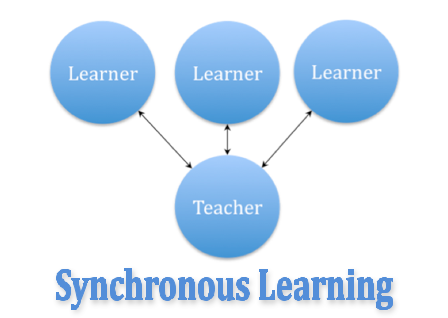
    Synchronous learning and the creation of a community.


    Synchronous activities can provide a sense of community (going back to the Maslow discussion - creating a safe environment for the expression of opinions). 


    Encouraging expression - with peers, instructors, experts and potential employers.  


    How the expression changes between groups (formal vs informal tones, word choices used if expressing to someone who studies their topic vs someone who doesn't).  Students should be prepared to make their case, state opinions and answer follow up questions.  Audiences should be mixed up to provide the opportunity to talk to many people.  Methods should also be mixed up (Blog, Vlog, Podcast, wiki, e-Portfolio)

    What is an e-Portfolio?


    To make your own, check out this lesson by a teacher for his class:


    Guidelines - why? What? Creating models?


    Ensuring your students know what you want is paramount!  If you fail to give clear instruction, you can expect to get everything from garbage to gold back!  In a F2F class,students can ask you questions easily and directly.  In an on-line or blended class, there is a delay in getting a reply.  Sometimes taking days to get a response.  Which is frustrating for a student who doesn't know if they are on the right track!

    By creating a model assignment, you can demonstrate to your students what you consider to be good work! Ensure they understand how to submit the assignment and the risks involved in sharing their document in an open forum (others being able to change or steal their work).


    Importance of role of interaction between students, teachers. How technology can be used to guide learning or as a method of expression.


    Technology is great.  But it adds zero value if you do not take time to provide timely feedback to the student.  That means reading and commenting on their blogs.  Joining in discussions.  Referring to a group chat in a F2F meeting.  

    Ensuring your students know you are paying attention to what they are saying and doing.  It adds to the community you are growing!

    So that is what I got from the reading and the supplemental research I did to support the reading and fill in my own gaps. I love having a structured environment to learn within that prompts me to research and discover extra things on my own!