Showing posts with label scrapbook. Show all posts

Monday, 19 May 2014

Week 5, Chapter 5: Quality Assurance in Blended Learning

Well, we're coming to an end of #BlendKit2014.  This is the last chapter to read, the last reading blog to write.  It's leaving me a little sad to be quite honest.  That said, I will still be writing about MOOCs once this course is done.  I still have topics to explore. I'm still taking courses and I am still interested in designing and developing blended and online courses.  As I have previously mentioned, I will be moving on to developing a program for adults with varying abilities which I am quite excited about.

Moving on...


Chapter 5 asks us to think about how we will know if our course is sound before teaching it. How will we know if it was effective once taught? How do we define quality? Success?

It's a little scary.  Because we can't. Not by our typical methods.

To start we have to define blended learning and what the best combination of online and F2F learning experiences happen to be...at this point in time, it seems impossible to do.  What works in one course with one teacher and one group may not work the same if one of those factors changed.  We know those factors change regularly - even within one course (as a side note, I am taking one 9 week class that has been divided into 3 - 3 week sections, each taught by a different prof) - and that can change the dynamics and what "works".

If only creating a blended learning course was as simple as creating a blended beverage!


Various researchers have identified some things that can help construct an effective blended learning course:

  • Rigorous Learning Assessment (Riley et al, 2014)
  • Responsiveness to Learner Characteristics (Skibba, 2014 and Dziuban, Hartman, and Mehaffy, 2014)
  • Student Engagement (Vaughn et al, 2014 and Dringus and Seagull, 2014)
  • High Quality Faculty Development (Dziuban, Hartman, and Mehaffy, 2014)

So you design a course that includes rigorous learning assessment, etc.  How do you know if your course is good or bad?

Is it good or bad??


First, you have to stop looking at the terms "good" or "bad".  It's a cheap cop out to giving quality, constructive feedback.  It can't just be based on whether it met "sufficient enrollment, adequate retention, academic rigor, student success, student satisfaction) at rates comparable to face-to-face courses (as if meeting face-to-face is, itself, a mark of excellence) or to the level of satisfaction of an accrediting agency."  There are no universal standards for blended learning course quality.  If such a standard existed it would be hard to create a tool to measure it by - and even if you made a tool, it would be too time consuming to effectively use.

Using for-profit companies to host an online courses has led to their developing specific standards for online courses. Most groups have a checklist or rubric  and give a "summative, ordinal rating". Once  a course has been reviewed with the form, there is a punch list of things to improve before going live next time. 

It's very important to survey your learners at multiple stages of your course to give you a chance to adapt to their needs.


There has to be evaluations completed at multiple stages by the various stakeholders - students and peers who may be auditing the course.  We must remember that it isn't the design of the site or even the specific content (we know it will change and develop as the course develops) but truly the lived experience that allows one to review the quality of course.  It becomes imperative to ask a cohort to audit your online or blended course - someone who can provide insight and feedback that will help you better develop your course in future iterations.  Someone who saw what went right or wrong in real time (like having someone sit in on a lecture to give you a review to improve student engagement). Always close the course with a survey to determine effectiveness, perceived quality of content and teaching methods, usefulness of assignments or quizzes, how frequently they used the forums, etc.
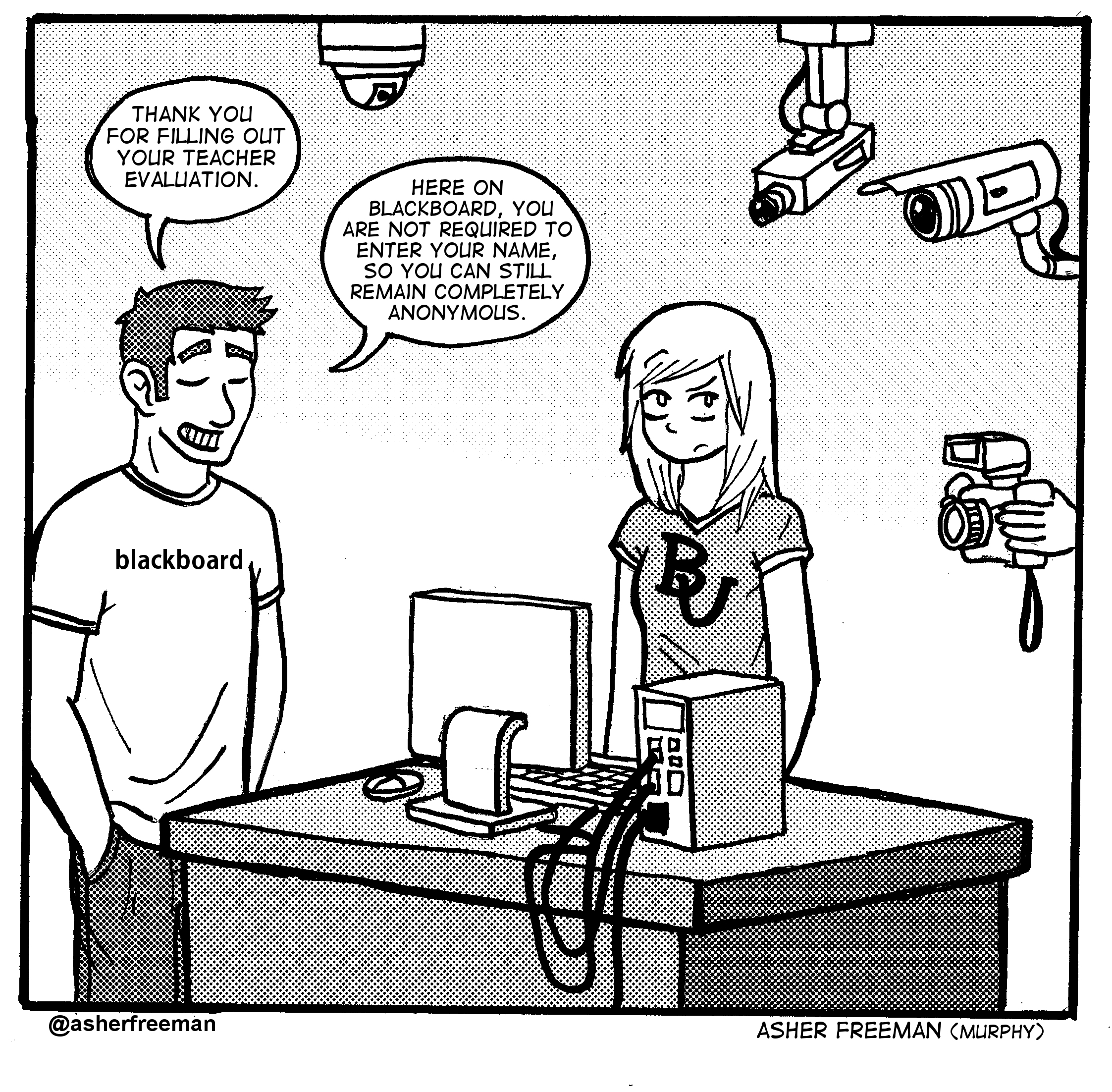
Make sure your surveys can be completed anonymously for useful and honest feedback...

Teaching Effectively


How can you teach effectively in a blended course?  
  • By being organized in your class and in your LMS.  
  • Knowing the material (no different than in a F2F class).  
  • Clear communication (you cannot over communicate - especially online, explain and over explain...you can't go wrong!).  
  • Provide timely feedback in the forums.  
  • Return graded assignments in a fair timeframe.  
  • Admit your technological know how up front (people are more forgiving if they know you are not a tech expert) but make friends with people who can help you out if you run into difficulties.
  • Use the feedback that you are given by past classes.  Use it to change the material, format or your teaching style to suit the class.


To help yourself...blog...write in a diary...keep a word document on your laptop...whatever to store your reflections.  What did you do?  Did it work?  What would make it work better? Did you achieve a goal?  Did you fall short?  Why? Why not? Did you get assignments graded within your self imposed time frame?


We tell students to reflect on what they have learned.  We should follow our own advice and reflect.

Back to the beginning...



How do we know how "good" our course is?  Well...we don't know exactly.  That measurement will only truly be known by the participants.  And that will change from person to person, class to class, course to course.  All we can do is survey and ask for their feedback.  Then we must react to that feedback and adjust for the next time. And survey, react and adjust. Wet, lather, rinse and repeat.


Friday, 2 May 2014

e-Portfolios

Earlier this week, I wrote about PLN (Personal Learning Networks).  I wrote about growing your social network, creating contacts, creating one location for your most useful tools.  I didn't get to talk about e-Portfolios.


What is an e-Portfolio?


According to Wikipedia:


An electronic portfolio (also known as an eportfolio, e-portfolio, digital portfolio, or online portfolio[1]) is a collection of electronic evidence assembled and managed by a user, usually on the Web. Such electronic evidence may include inputted text, electronic files, images, multimedia, blog entries, and hyperlinks. E-portfolios are both demonstrations of the user's abilities and platforms for self-expression, and, if they are online, they can be maintained dynamically over time. Some e-portfolio applications permit varying degrees of audience access, so the same portfolio might be used for multiple purposes. According to Anderson, e-portfolios can then go viral and be passed on to be easily viewed by many on the web...An e-portfolio can be seen as a type of learning record that provides actual evidence of achievement. (emphasis mine)
A type of learning record that provides actual evidence of achievement.  I like that.  

When I wasn't training in my last job, I was acting as a recruiter.  In that role I reviewed thousands (upon thousands...ugh) of resumes.  Unfortunately for many of them, they felt fake. Really?  You did three different degrees and you WANT to sell pillows or sinks for a living?  That is your entire goal? Right.  Conversely, there were people applying who had very thin resumes, but once you spoke with them, you discovered they had a TON of experience, single courses, or volunteer experience that made them a great fit for the culture.  Most of which did not belong on a traditional resume.


As I may have mentioned, I take a lot of MOOCs.  Where do they belong on my resume?  They are education, but don't lead to a degree.  Or a certificate necessarily.  On my paper resumes, I have added them under Education.  I am excited (however) to create an e-Portfolio to list on my resume just below my LinkedIn site.


Just as LinkedIn gave me the chance to show who I worked for, tell what I did, and have co-workers share recommendations about me, my e-Portfolio will show the classes I have taken, show some of the work I did (notes, test results, copies of assignments), and allow other students to write recommendations about me. Another thing my e-Portfolio will do is provide evidence of the course - a link to a description of the course and a link to a digital copy of a certificate (if provided).

As a sidenote: e-Portfolios are used for more than just MOOCs.  F2F classes benefit as well.  All students can benefit.  More info is available here.

How do they help?


Like a portfolio or scrapbook, an e-Portfolio allows you to gather together all of your achievements, showcase them, and give extra weight to your resume.  Unfortunately, a lot of employers don't put a lot of value on MOOCs.  I don't think I would have prior to taking these classes. Being able to provide copies of your work or references from students or professors provides credibility to your continuing education.  

Besides, who doesn't like looking at a scrapbook or album?  They generate GREAT conversation starters in an interview and being able to show or refer to work you have already done will improve your confidence, better highlight your value and impress the heck out of the hiring manager!!


Who uses e-Portfolios?


According to my Google search, most e-Portfolio companies claim to be partnered with a lot of big name US, Canadian and British universities.  The e-Portfolio is often tied into a PLN or Course Management Systems.

I know a local Community College has tied Portfolio Learning into several of their diploma courses for years.  They are a requirement to graduate.  Not only do they showcase great work, but goals, personal reflections and a skills inventory.  Admittedly, these started off as paper portfolios, but users are adapting the medium to suit their needs.


What makes a good e-Portfolio?

http://electronicportfolios.org/balance/Balancing.jpg


  • Like anything it needs to be well organized. Documents need to be grouped with the right class.
  • To be Dynamic! Use multimedia, links to websites that you have worked on (like your blog about a course), notes from your course, screen shots of test results.
  • To include comments or recommendations from fellow students or professors. Not only does this give a nice boost to your work, it also shows the depth and breadth of your professional network (I worked with a professor from England, a student from Egypt, another student from Australia, etc).

Who offers e-Portfolios?

There are many places who offer e-Portfolios.  I've tried a couple.


I've taken classes from canvas.net and that site allows me to create my own e-Portfolio.  I spent a bit of time creating mine but I really wasn't satisfied with the outcome or the experience.


Then I tried using Google Sites.  By the time I got this far, I was done.  I couldn't figure any of it out.  Which is why I do not create websites.  Setting up a blogger.com site was enough for me!


As #BlendKit2014 provides badges, I have Credly.com and a Mozilla Backpack.  They show the badge and the requirements, but not MY work.  Pretty, easy to use, but not quite what I needed.


I thought I was done with the whole e-Portfolio adventure until I came across Danny King in a class I am taking on Coursera.org called "An Introduction to Marketing".  On a discussion board, he offered to share a copy of his notes from that weeks' videos.  When I clicked on the link, and I was impressed.  Further reading of the discussion took me to Accredible.com.  I was able to see his notes in a neat and organized fashion.  An impressive graphical list of courses he is or has taken, and copies of his certificates.


Impressed was an understatement.

I decided to try it.  One last kick at the can if you will.  The website was easy to navigate.  Things were clearly marked.  I could search course by Provider, Subject and start date.  In 30 minutes, I had several courses identified, my background selected, and a hunt started to find the files that I wanted to share.  I was happy with the result.


Then I realized I could find other people taking the same courses, so I visited their pages, and started following them (you never know if someone is going to share something that clears up a confusing topic!).  I added additional material.  I was building my network.


Then I had a small issue last night.  Canvas.net was listed as a provider, but I couldn't access the courses.  Others had been able to, and I worried that it was just me.  So I sent in a support request.  A minute later, I had a automated response letting me know they had received my message. By the time I was up and going this morning, I had a personal response with an apology, what happened (I found a bug) and an answer - they fixed it.  Less than 12 hours.  Eight + of which was sleeping time.  They took the time to fix it overnight.

Accredible.com is a very new site - it only went live on April 21, 2014.  That's 11 days ago.  They are focusing on the users needs, time limits, making a user friendly platform and ensuring an overall great experience.  I am so impressed that I HAD to tell you about them.  (No, I am not affiliated with them other than as a user.  I'm not getting paid to tell you about this.  This was not solicited by them).  I do not have time for platforms that are not intuitive.  This site was.

I don't do star ratings, but this site as it is today is 
and is only going to get better with the plans they have, the opportunities they have and their willingness to listen to the user (you can make and vote on suggestions!).

Of course, there are other sites, but I would suggest you go to Accredible.com!