Showing posts with label LinkedIn. Show all posts

Friday, 2 May 2014

e-Portfolios

Earlier this week, I wrote about PLN (Personal Learning Networks).  I wrote about growing your social network, creating contacts, creating one location for your most useful tools.  I didn't get to talk about e-Portfolios.


What is an e-Portfolio?


According to Wikipedia:


An electronic portfolio (also known as an eportfolio, e-portfolio, digital portfolio, or online portfolio[1]) is a collection of electronic evidence assembled and managed by a user, usually on the Web. Such electronic evidence may include inputted text, electronic files, images, multimedia, blog entries, and hyperlinks. E-portfolios are both demonstrations of the user's abilities and platforms for self-expression, and, if they are online, they can be maintained dynamically over time. Some e-portfolio applications permit varying degrees of audience access, so the same portfolio might be used for multiple purposes. According to Anderson, e-portfolios can then go viral and be passed on to be easily viewed by many on the web...An e-portfolio can be seen as a type of learning record that provides actual evidence of achievement. (emphasis mine)
A type of learning record that provides actual evidence of achievement.  I like that.  

When I wasn't training in my last job, I was acting as a recruiter.  In that role I reviewed thousands (upon thousands...ugh) of resumes.  Unfortunately for many of them, they felt fake. Really?  You did three different degrees and you WANT to sell pillows or sinks for a living?  That is your entire goal? Right.  Conversely, there were people applying who had very thin resumes, but once you spoke with them, you discovered they had a TON of experience, single courses, or volunteer experience that made them a great fit for the culture.  Most of which did not belong on a traditional resume.
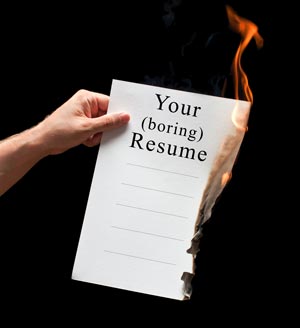


As I may have mentioned, I take a lot of MOOCs.  Where do they belong on my resume?  They are education, but don't lead to a degree.  Or a certificate necessarily.  On my paper resumes, I have added them under Education.  I am excited (however) to create an e-Portfolio to list on my resume just below my LinkedIn site.


Just as LinkedIn gave me the chance to show who I worked for, tell what I did, and have co-workers share recommendations about me, my e-Portfolio will show the classes I have taken, show some of the work I did (notes, test results, copies of assignments), and allow other students to write recommendations about me. Another thing my e-Portfolio will do is provide evidence of the course - a link to a description of the course and a link to a digital copy of a certificate (if provided).

As a sidenote: e-Portfolios are used for more than just MOOCs.  F2F classes benefit as well.  All students can benefit.  More info is available here.

How do they help?



Like a portfolio or scrapbook, an e-Portfolio allows you to gather together all of your achievements, showcase them, and give extra weight to your resume.  Unfortunately, a lot of employers don't put a lot of value on MOOCs.  I don't think I would have prior to taking these classes. Being able to provide copies of your work or references from students or professors provides credibility to your continuing education.  

Besides, who doesn't like looking at a scrapbook or album?  They generate GREAT conversation starters in an interview and being able to show or refer to work you have already done will improve your confidence, better highlight your value and impress the heck out of the hiring manager!!


Who uses e-Portfolios?


According to my Google search, most e-Portfolio companies claim to be partnered with a lot of big name US, Canadian and British universities.  The e-Portfolio is often tied into a PLN or Course Management Systems.

I know a local Community College has tied Portfolio Learning into several of their diploma courses for years.  They are a requirement to graduate.  Not only do they showcase great work, but goals, personal reflections and a skills inventory.  Admittedly, these started off as paper portfolios, but users are adapting the medium to suit their needs.


What makes a good e-Portfolio?

http://electronicportfolios.org/balance/Balancing.jpg


  • Like anything it needs to be well organized. Documents need to be grouped with the right class.
  • To be Dynamic! Use multimedia, links to websites that you have worked on (like your blog about a course), notes from your course, screen shots of test results.
  • To include comments or recommendations from fellow students or professors. Not only does this give a nice boost to your work, it also shows the depth and breadth of your professional network (I worked with a professor from England, a student from Egypt, another student from Australia, etc).

Who offers e-Portfolios?

There are many places who offer e-Portfolios.  I've tried a couple.


I've taken classes from canvas.net and that site allows me to create my own e-Portfolio.  I spent a bit of time creating mine but I really wasn't satisfied with the outcome or the experience.


Then I tried using Google Sites.  By the time I got this far, I was done.  I couldn't figure any of it out.  Which is why I do not create websites.  Setting up a blogger.com site was enough for me!


As #BlendKit2014 provides badges, I have Credly.com and a Mozilla Backpack.  They show the badge and the requirements, but not MY work.  Pretty, easy to use, but not quite what I needed.


I thought I was done with the whole e-Portfolio adventure until I came across Danny King in a class I am taking on Coursera.org called "An Introduction to Marketing".  On a discussion board, he offered to share a copy of his notes from that weeks' videos.  When I clicked on the link, and I was impressed.  Further reading of the discussion took me to Accredible.com.  I was able to see his notes in a neat and organized fashion.  An impressive graphical list of courses he is or has taken, and copies of his certificates.


Impressed was an understatement.

I decided to try it.  One last kick at the can if you will.  The website was easy to navigate.  Things were clearly marked.  I could search course by Provider, Subject and start date.  In 30 minutes, I had several courses identified, my background selected, and a hunt started to find the files that I wanted to share.  I was happy with the result.


Then I realized I could find other people taking the same courses, so I visited their pages, and started following them (you never know if someone is going to share something that clears up a confusing topic!).  I added additional material.  I was building my network.


Then I had a small issue last night.  Canvas.net was listed as a provider, but I couldn't access the courses.  Others had been able to, and I worried that it was just me.  So I sent in a support request.  A minute later, I had a automated response letting me know they had received my message. By the time I was up and going this morning, I had a personal response with an apology, what happened (I found a bug) and an answer - they fixed it.  Less than 12 hours.  Eight + of which was sleeping time.  They took the time to fix it overnight.

Accredible.com is a very new site - it only went live on April 21, 2014.  That's 11 days ago.  They are focusing on the users needs, time limits, making a user friendly platform and ensuring an overall great experience.  I am so impressed that I HAD to tell you about them.  (No, I am not affiliated with them other than as a user.  I'm not getting paid to tell you about this.  This was not solicited by them).  I do not have time for platforms that are not intuitive.  This site was.

I don't do star ratings, but this site as it is today is 
and is only going to get better with the plans they have, the opportunities they have and their willingness to listen to the user (you can make and vote on suggestions!).

Of course, there are other sites, but I would suggest you go to Accredible.com!


    Tuesday, 29 April 2014

    PLN - Personal Learning Networks???

    WTH is a PLN????

    Personal Learning Networks??


    What is a PLN?  Well, I've done a lot of reading today on this.  To put it in simple terms (just like I like it) - it's using your social media tools to create a circle of people "around" you who can help you personally and professionally.  
    • It's the blogs you read by people who are interested in a similar topic.  
    • It's that Pinterest board you look at for ideas for creating lesson plans.  
    • It's your LinkedIn network of pros in your field.  
    • It's the folks you follow on Twitter from your #blendkit2014 course. 
    • It's the Q&A board that you go to.
    • Heck, it's even the YouTube channels you follow.


    Social Networks


    I love this top 10 list.  Especially #10.  Get to know the people in the office/class/cubicle next to you. You never know when somebody close by may have the answer you need, be a SME (Subject Matter Expert), know how to use Google forms better than you - or be willing to listen to a lecture and give you constructive feedback.  Foster these relationships.  Add them to LinkedIn.  Get an email address for them.  Follow their professional blogs.  I wouldn't suggest adding them to Facebook...you never know what they might post that you just don't want to know!!!


    Once you decide to create your PLN, you need to decide how "active" you want to be.  The graphic above gives you that designers POV.  I'm going to share my own with a few tools I use regularly.

    LinkedIn - High Profile, Low Communication, Visit as you like

    I'm going to admit upfront that I love LinkedIn.  In fact, if you would like to add me to your PLN, just click on the hyperlink.  I've joined various groups.  Sometimes I respond to posts.  More often than not, I don't but I enjoy reading others responses.  Frankly, if more than 1 person has shared my POV, I don't feel the need to share it again.  

    What I like best is being able to message one of the professionals in my past or present without having to constantly following up to ensure I have the most up-to-date contact info.  I can ask a question privately, or in a group (like my Alumni group).  I can connect with other people in my field without having to have them in my circle of friends.

    The other great thing is that it doesn't have the junk that goes along with Facebook.  No pictures of your colleague drunk at the Holiday party, very few of the chain posts (if you don't share in the next 5 minutes, you will have this happen...yeah right!), and a healthy separation of home and work.

    Blogs - Potentially High Profile, High Communication on your part if blogging, Potentially a big Commitment

    Following a blog requires little commitment - you can often get an email when a new post has been added and decide from there if you want to read or respond.  Having your own blog requires a lot more commitment - if you are not posting new material that captures your target audiences attention, well, good luck finding it useful - for you or your followers.  It's not only good, new material but also on a timely basis. 

    For me to maintain this blog as it is now, I spend read the weekly chapter, write that summary, and then pick 4 topics that I want to explore more.  I allow myself a minimum of 1-2 hours of research and then at least an hour to write.  Yep, 3+ hours a post. But I want to read content, understand context, find relevant information (and great graphics!) to share.  For this post alone, I visited at least 14 sites!

    Twitter - High Profile, High Communication, Highly Addictive!

    Twitter is my best friend (and you are welcome to follow me there).  It's the first thing I check in the morning and the last thing at night.  I need my news fix before I roll out of bed or before I am incommunicado while I sleep.  I follow everyone that interests me - people who are provocative and love to debate, people who are "in the know" with different things in my city, people who tend to share what I post, giving me a larger group with whom to share my views.

    I follow #hashtags (the # sign followed by wordswithnospaces).  Hot topics tend to trend with hashtags (like #blendkit2014).  Sometimes I come up with some great hashtags, generally they are just silly (like #mmmmmbaconandpeanutbuttergoodness about the Nutty Professor burger I had at Flipburger today).

    Anyone who favourites or retweets anything I write gets a profile look and if they share similar interests, I #followback. You can create lists to group together anyone you follow by topic (or however you choose to organize it). Then you can select that list and only see those peoples tweets.

    Try it and have fun - but don't say I didn't warn you! It's addictive!!

    I think this picture gives you some great ideas for growing your PLN.

    Don't forget, PLN's are not just for teachers, but for students too!  If you have a guest come into your class, have them share their twitter handle.  Helping students develop a professional network may lead to summer work or internships, a mentor, or even a collaborator on a project down the road!  Networking is as important, if not more so, than strong resume writing skills!


    Other Tools


    This video talks about developing more than just your social network.  It talks about grouping together the tools you use regularly like:


    • GMail or other Email program
    • Skype
    • Hangouts or other Instant Messaging
    • Bookmarking sites like Diigo
    • Google or other search engine
    • Pinterest
    • Q&A sites like Yahoo Answers
    • YouTube
    • News Services
    • Wikis
    • Google Docs

    What tools do you use regularly? What is always open on your computer?  Where can you go for information without asking a colleague?

    Just Remember...


    The most important thing to remember about PLNs is that data goes both ways.  

    It doesn't just flow to you, it flows from you too.  Jump in, join a conversation.  Start a thread.  Write a blog (and share it here!).  When you read, let the author know your thoughts (Does the blog have too many links? Too little content? Is it oversimplified? Do you need a PhD to understand it?  Is it missing a major point?  Did the author brush past a topic that you want more information about?).  I guarantee you that the author would far rather know what their audience wants, instead of guessing! (Yes, it is a bit of a plea - comment below.  Let me know what is or isn't working for you). 

    Whatever you do in your PLN, have fun, learn something, and share something. Thank you!


    Wednesday, 23 April 2014

    The use of Badges in On-line Learning

    Disclaimer: I like to game on Facebook.  I'm not a true gamer by conventional definition.  I play app games, Facebook and occasionally, the Sims.

    The "Game-ification" of Education.  Sounds a little weird but it is a reality.

    As a Gen X'r, I grew up with a computer in the home.  As a I mentioned, I play some games on-line.  I was a Girl Guide.  I am goal oriented.  For someone like me, Badges are AWESOME!!  I am constantly trying to find new learning opportunities.  I truly believe that if I haven't learned something new today then my day has been wasted.  I could cure Cancer, create World Peace and end Hunger, but if I didn't learn something new that day, it would have been wasted.  OK, I'm not quite that bad but almost.  But I digress.

    Badges are a great way of identifying new skills and learning opportunities without having to go through a formal learning program.  It isn't a Certificate or Diploma or Degree to hang on the wall, but these are still representations of valuable skills one has learned or tasks one has completed.  I think there is great value in this process and I hope it is one that sticks.  I've included a link to Mozilla's wiki on Badges.  You should definitely check it out!


    If you think back to your childhood, how exciting was it when you got a sticker or a stamp on a test or assignment?  How about when you learned to boil an egg and got your Cooking badge in Guides or Scouts?  When something you worked hard on was publicly acknowledged?

    When, as an adult, was the last time your hard work was acknowledged publicly?

    For me, it was yesterday when I earned not one but three (3) badges in my #BlendKit2014 course.  Am I excited?  You bet!  Did I share it on LinkedIn?  Yep, at least one!


    This no (or low) cost award generates excitement in the learner.  Makes them want to do more to earn more.  A lot of groups and websites now offer badges to add to your credentials.

    Imagine being a student.  For every time you do your assigned reading (and comment on it electronically), complete an assignment, write a test, submit a project, improve a grade, whatever, you got a badge.  After so many in each category, you got a certificate or a badge that you want to show off.  Something you could add to your resume.

    What if you were a student who didn't love to learn or didn't think school was cool?  What if changing your learning environment from a classroom with a teacher talking at you to an on-line environment with goals and rewards, videos, links and interactive chat sessions was a better option?  Maybe a blended environment, where you could learn asynchronistically (OK, I hate big words that mean nothing to the rest of us so...it means learn on your own versus synchronous learning which is learning with a group) for the content and then in a class for the context.  Web 2.0 is all about making life and learning easier...

    As an employee, what if you were awarded a badge each time you had a customer compliment, missed 0 days of work in a given time period, met your sales target, took a course, passed your WHMIS exam (again), worked safely and accident free for a given time period?  How would you feel?  What if it eventually became acceptable and expected to include in your resume a link to your backpack with all of your "real life" credentials?

    I have learned first hand how much adults like to be recognized for training.  At a previous employer, I taught many product classes.  I maintained a board with names and courses in the staff lounge.  As a person took a class, they received a pin or sticker on the grid to indicate its completion.  On many a lunch hour did I pop into the lunch room to hear the excited whispers of "Did you see how many pins I earned this month?".  This enthusiasm drove their desire to learn more - and heaven forbid if their friend had more classes than them!!  It didn't matter if the person was 18 or 58, they all loved the recognition of what they had done and what they could offer.

    In my next career, whatever it may be, I hope the employer will consider using the Open Badges program to offer acknowledgement for a job well done or a course taken to their employees.